

Playbook · Team Building
How to Plan a Corporate Scavenger Hunt
Most scavenger hunts fail in the brief, not on the floor. Here's how to design one that works the first time.
 AuthorSteve Dunkley· Head of Growth8 min read
- Use Case
- Team Building
- Audience
- HR · People Ops · Team Leads
- Format
- Step-by-Step Playbook
- Group Size
- 20–500
- Duration
- 60–120 Min Gameplay
- Effort to Run
- Low to Medium
A corporate scavenger hunt is one of the most effective ways to create engagement at team building events, offsites, and company celebrations. It combines collaboration, movement, and problem-solving in a format that feels both social and natural. But to make it successful, the experience needs to be well designed. Here’s how to plan a corporate scavenger hunt that people actually enjoy.
1. Define the Goal of Your Team Building Activities
Start by understanding what you want to achieve.
Surveying employee interests before planning helps drive stronger voluntary participation and improve employee engagement.
A corporate scavenger hunt can be used to:
- strengthen team collaboration
- onboard new employees
- energise a company offsite
- support a larger event or conference
The goal will shape everything from the type of challenges to how teams are structured. Clear objectives also help you build a positive work environment and lift team morale, and that matters because Gallup links highly engaged teams to 23% greater profitability and 81% lower absenteeism.
2. Choose the Right Format
Not all scavenger hunts are the same.
For corporate events, the most effective formats are flexible and allow participants to move at their own pace. This is especially important for larger groups or mixed teams, and the format should also work for hybrid team building events that include both in person and remote participants.
You can run:
- team-based scavenger hunts
- free-flow experiences across a venue
- time-based competitions with a leaderboard
A remote team may need digital participation paths through virtual platforms. The key is to keep it simple and easy to join.
3. Design Engaging Challenges
The quality of the experience depends on the challenges.
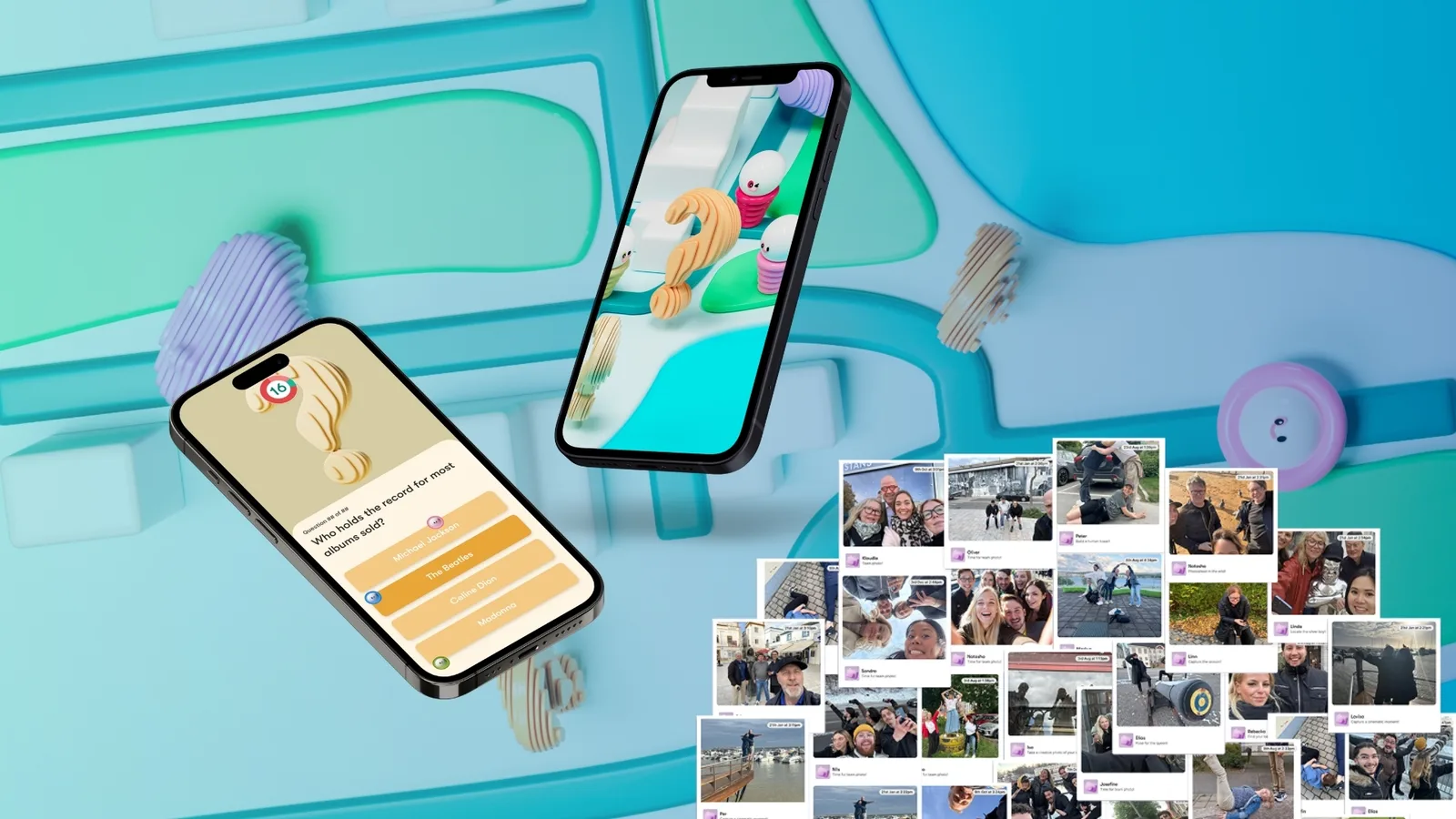
A good corporate scavenger hunt includes a mix of tasks that encourage interaction and creativity. This can include photo challenges, short missions, and location-based questions tied to the environment, with teams using apps to follow clues as they move through the hunt.
Instead of making everything about speed, focus on tasks that get people talking, collaborating, and exploring together. The best exercises build communication skills and critical thinking at the same time. Well-designed team building exercises can also borrow from improv games to improve quick adaptation, while role-playing games develop negotiation and conflict-resolution skills. Role-playing can also encourage collaboration and lead to creative solutions.
4. Use the Environment
One of the biggest advantages of a scavenger hunt is the ability to use physical space.
Whether your event takes place outdoors or indoors, including in a conference room, design challenges that guide participants through different areas. This creates movement and helps distribute people naturally across the event, and even indoor team building setups can move groups between stations or zones.
The environment should feel like part of the experience, not just the backdrop.
5. Keep It Easy to Join
A common mistake is overcomplicating the setup.
Participants should be able to join quickly and understand what to do without long instructions. This is why many organisers use a scavenger hunt app, allowing guests to access challenges directly from their phones. That keeps it practical for small groups and easy to scale from 6 to over 150 participants when onboarding is simple, so the entire team can join without friction.
At ReadySet, we’ve seen that simple onboarding leads to much higher participation rates.
6. Add Light Competition
Competition can increase engagement when it feels like friendly competition, but it should remain low-pressure.
A live leaderboard or simple scoring system is often enough to keep energy levels high without making the experience feel stressful.
The goal is to create fun and motivation, with scoring that adds just the right amount of energy to boost morale and team spirit without pressure.
7. Align with Your Company Culture
The most effective corporate scavenger hunts feel relevant to the people participating.
You can include:
- company-related questions
- challenges tied to values or culture
- tasks that encourage cross-team interaction
- culture-aligned group activities such as community service connected to social responsibility
This helps turn the activity into something more meaningful than just a game. It can build stronger teams through better team bonding and help boost team morale.
8. Keep It Flexible
Not everyone will participate in the same way. Some teams will go all in, while others will engage more casually. A good scavenger hunt allows both.
Flexible team building activities can support different teams across any skill level, but they should still include post-event feedback to measure satisfaction and effectiveness. By designing the experience to run in the background, participants can join at any time and at their own pace.
Ready to Plan Your Own Team Building Scavenger Hunt?
A corporate scavenger hunt is one of the simplest ways to turn a standard event into something more engaging.
With the right structure and tools in place, it can scale from small team activities to large corporate events without adding complexity.
Visit our ReadySet Studio and start planning your Scavenger Hunt!
Build an activation like this
Your venue. Your brand.
Our engine.
ReadySet powers branded interactive experiences for agencies, brand teams, and enterprise event programs, without the standalone app build.