

Perspective · Interactive Events
Interactive Events: Turning Physical Spaces Into Play
The best interactive events don't ask attendees to participate. They make participation the most natural thing to do.

- Topic
- Interactive Events
- Audience
- Producers · Agencies · Venue Owners
- Format
- Perspective
- Depth
- Quick Read
- Reading Time
- 6 min read
- Updated
- Feb 2026
Discover how interactive events transform physical spaces into engaging, scalable experiences by bridging the gap between digital interaction and real-world exploration.
Interactive Events: Turning Physical Spaces Into Engaging Experiences
At ReadySet, we work with interactive events across cities, venues, and live environments. Over time, we’ve seen a clear shift away from passive formats toward experiences that invite people to move, explore, and actively take part.
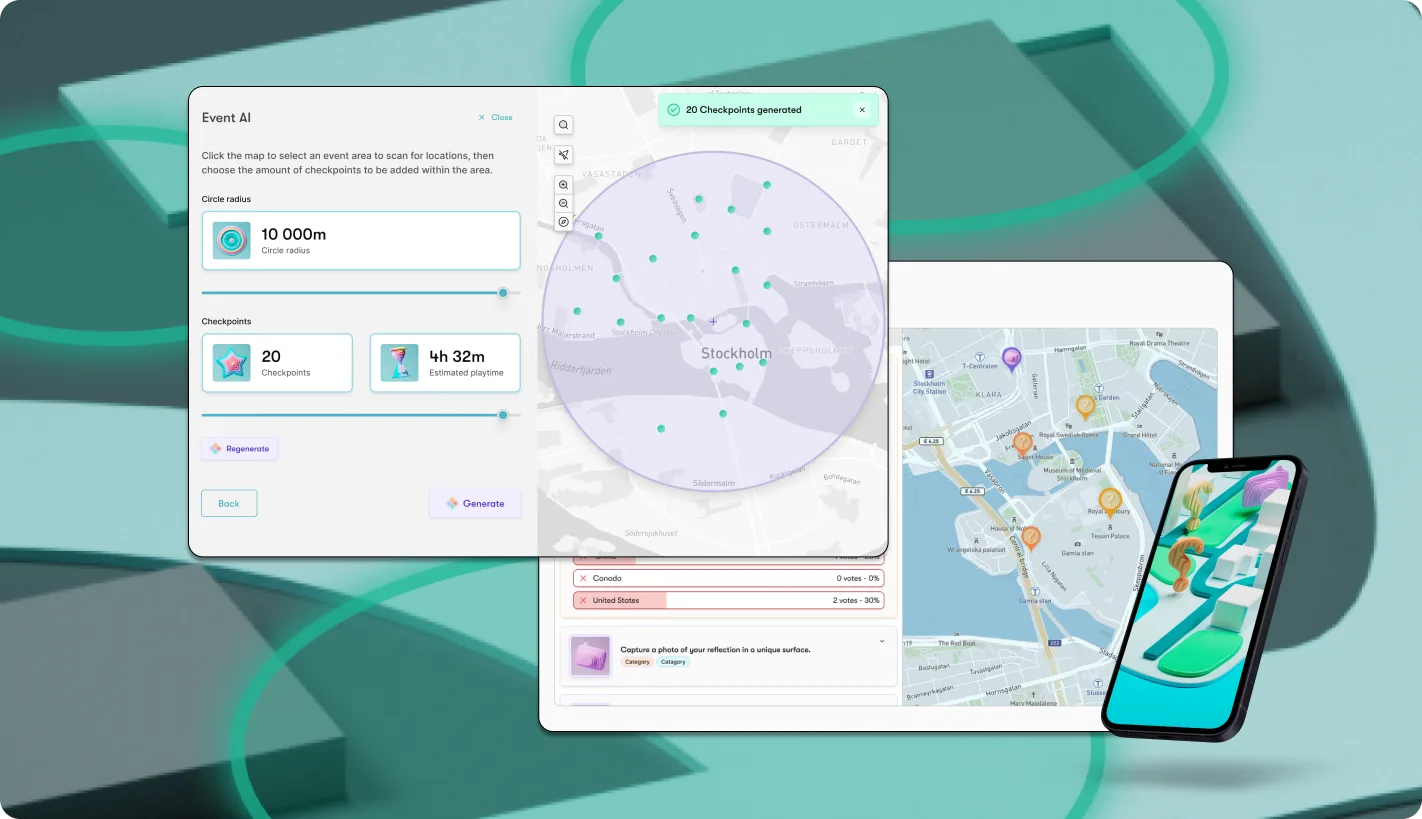
Interactive events combine physical spaces with digital interaction to create engaging experiences that are memorable, measurable, and scalable. Instead of placing people in an audience role, they turn participants into active contributors.
What Are Interactive Events?
Interactive events are interactive experiences where engagement happens through action rather than observation. Participants might move between locations, unlock challenges on-site, collaborate with others, or contribute content such as photos and videos along the way.
From our experience, these interactive experiences work best when they are connected to real environments. They are commonly used across cities, venues, festivals, conferences, and brand activations, often delivered through a mobile platform that links digital challenges to physical locations.
Rather than being limited to a single moment or stage, interactive experiences unfold across space and time.
Why Interactive Experiences Work
We’ve seen that people engage more naturally when they are encouraged to participate rather than follow instructions. Movement, discovery, and choice create stronger emotional connections than passive formats.
For organizers, interactive experiences also solve practical challenges. They increase dwell time, encourage exploration, distribute crowds more evenly, and generate meaningful engagement data. Because interaction happens in the real world, the experience feels authentic and less like traditional event technology.
In short, interactive experiences align with how people naturally behave in live environments.
Common Use Cases for Interactive Experiences
At ReadySet, we see interactive experiences used across a wide range of contexts. Conferences use them to activate large venues beyond session rooms. Festivals use them to guide visitors through multiple zones. Cities and destinations use them to encourage exploration and discovery.
They are also used for brand activations, internal company initiatives, and public campaigns where engagement needs to scale beyond a single location or moment. The format adapts to the environment, whether it’s urban, indoor, outdoor, or hybrid.
Real-World Examples
TrailMix Games
In the TrailMix experience, we helped turn company values into something people could actively explore rather than passively receive. Instead of a presentation or internal document, participants moved through physical locations and completed challenges tied to those values.
The result was an interactive experience that felt tangible, social, and memorable, showing how these formats work just as well internally as they do publicly.
Lap of Lights at Silverstone
At large-scale live events like Lap of Lights, interactive experiences are used to engage thousands of participants across a wide physical area. Through location-based challenges and exploration, fans interact with the venue itself, not just the main attraction.
This type of experience allows engagement to scale while remaining personal, even in high-traffic environments.
When We Use ReadySet for Interactive Experiences
We built ReadySet specifically for interactive experiences that take place across physical spaces. From our experience, it’s most effective when engagement needs to happen across multiple locations, when movement and exploration are part of the experience, or when digital interaction is meant to support real-world behaviour.
ReadySet is commonly used to combine quizzes with creative challenges such as photos and videos, and to support branded or white-label experiences where flexibility matters.
For screen-based quizzes, meetings, or classroom-style engagement, simpler tools can be sufficient. For experiences rooted in physical environments, event-focused platforms are built for that purpose.
Bringing It All Together
Interactive events have evolved into experience-driven formats that prioritise participation over presentation. By connecting digital interaction with physical environments, interactive experiences create moments that people remember, talk about, and return to.
From what we’ve seen, experience-led formats are becoming a core tool for organisers who want to engage audiences at scale, across space, and in meaningful ways.
Get started creating your own interactive event here -->
Build an activation like this
Your venue. Your brand.
Our engine.
ReadySet powers branded interactive experiences for agencies, brand teams, and enterprise event programs, without the standalone app build.