Best Activities for Large Groups: 8 Proven Options for 50+ People
This guide shares eight proven activities that work consistently with 50+ participants, selected based on real event organizer experience.
Best Activities for Large Groups: 8 Proven Options for 50+ People
Planning an event for 50 or more people creates unique challenges that smaller gatherings simply don’t face. The activities that work beautifully with 15 colleagues often fall apart when you scale to 100 participants. People end up waiting in lines, watching instead of participating, or checking their phones while a handful of others take turns.
We’ve organized events ranging from intimate team retreats to conferences with thousands of attendees. What we’ve learned is that activities for large groups require fundamentally different design principles than small group experiences. They need to solve the waiting problem, eliminate performance anxiety, and keep everyone engaged simultaneously.
Why does this matter? According to a study in the International Journal of Management and Entrepreneurship, team-building activities improve decision-making processes, productivity, job satisfaction, interpersonal relationships, and organizational commitment. But you only capture those benefits when participants actually engage rather than stand on the sidelines.
The key factors that determine success with large group events include scalability (can it handle 2000 people as easily as 50?), entertainment factor (does it actually feel fun?), and inclusive participation (can everyone join regardless of physical ability or personality type?). Activities that lower social barriers and energize crowds are effective for large gatherings, while those requiring individual spotlight moments tend to create awkward situations.
This guide shares eight proven activities that work consistently with 50+ participants, selected based on real event organizer experience.
How We Chose the Best Large Group Activities
Not every team activity scales well. These selection criteria separate activities that actually work at scale from those that create chaos:
Scalability – The activity must accommodate 50-1000+ participants simultaneously without creating bottlenecks. If only two players can participate at once while everyone else watches, it fails this test.
Engagement level – Every person should be actively involved, not waiting for their turn. Activities work best when they require minimal central facilitation and run on their own momentum.
Setup simplicity – Event organizers have enough on their plates. Activities requiring very little preparation or specialized equipment score higher than those needing elaborate staging.
Flexibility – The best large group activities work anywhere on Earth, in any publicly accessible area. Whether you’re in a hotel ballroom, a city park, or a conference center, the format should adapt.
Inclusivity – Group size diversity means ability diversity. Activities accommodating different physical abilities and personality types outperform those requiring specific skills. Balancing active movement with low-pressure social interaction enhances success rates.
Time efficiency – Most corporate schedules allocate 30-90 minutes for group activities. Options delivering maximum impact in that timeframe get priority.
Cost effectiveness – Material costs shouldn’t scale linearly with group size. The best activities provide value without breaking event budgets.
Top 8 Activities for Large Groups
These eight activity categories have proven effective across hundreds of large group events. Each solves the fundamental challenges of keeping big groups engaged while creating meaningful shared experiences.
1. Interactive Scavenger Hunt
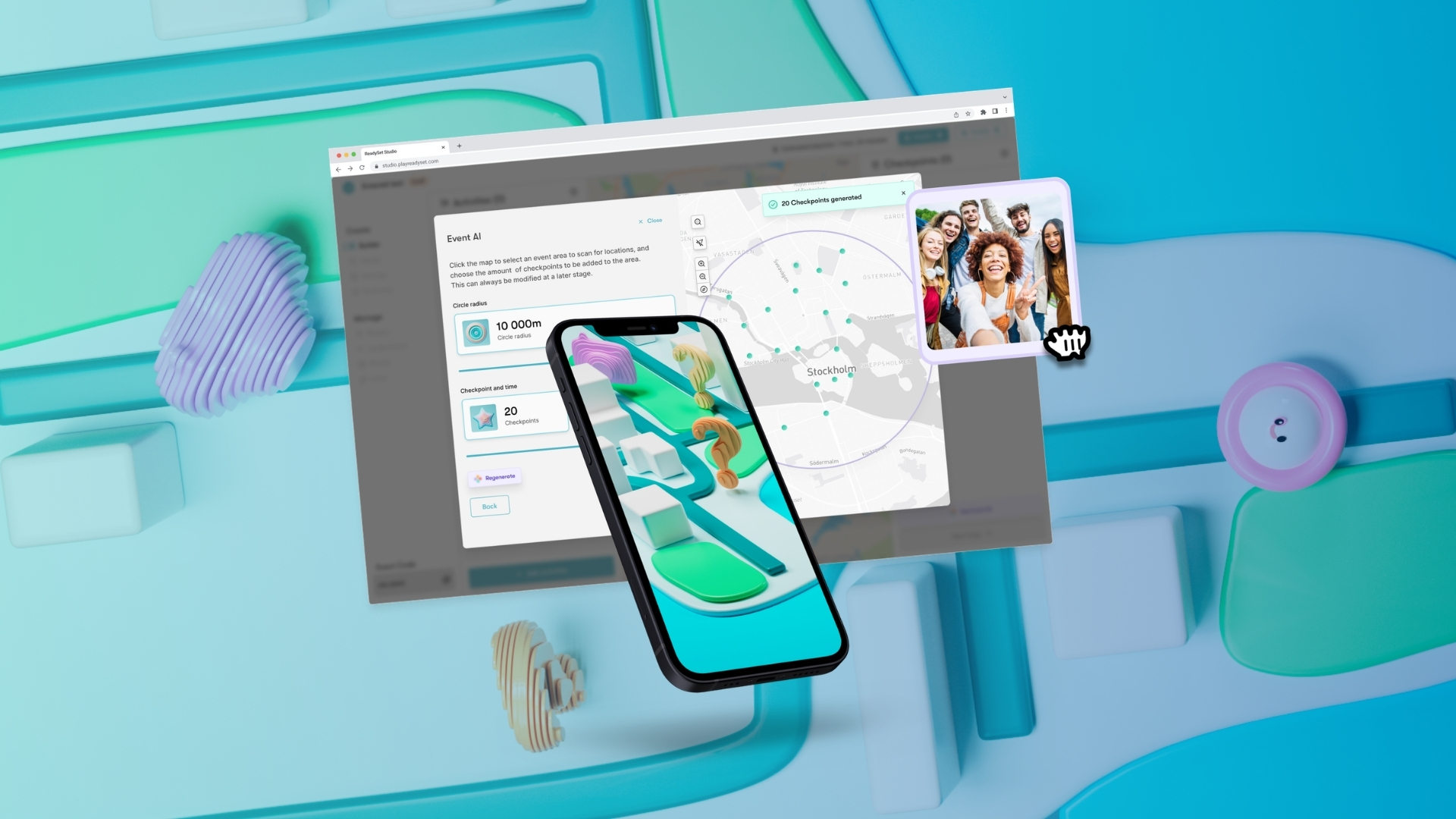
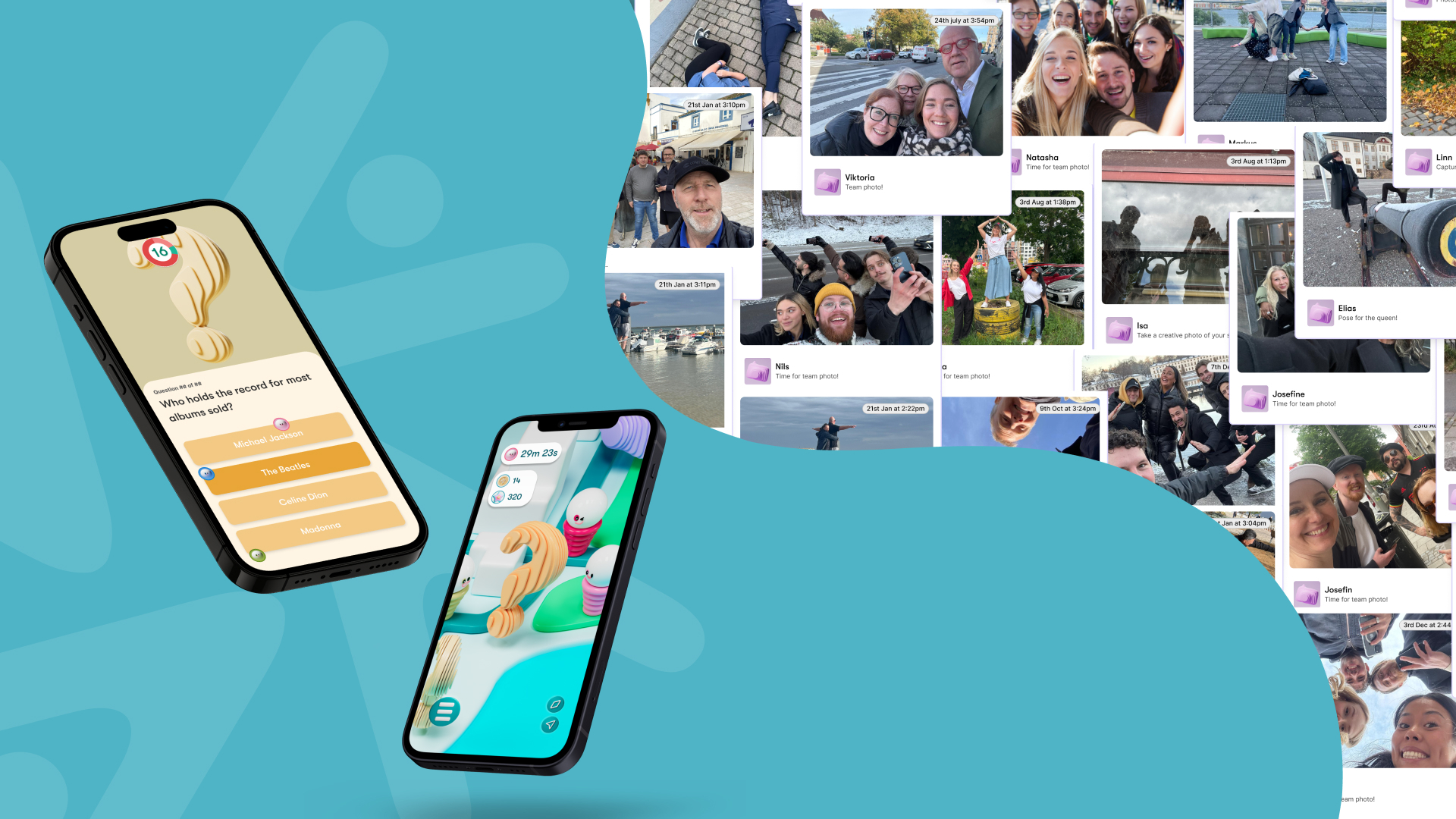
A scavenger hunt is a collaborative and mobile activity that can be easily organized for large groups, allowing participants to explore their surroundings while working together. Modern platforms like ReadySet transform traditional scavenger hunts into gamified experiences with checkpoints, challenges, photo verification, and real-time leaderboards.
This format made the list as the most scalable and customizable option available. It’s the whole group activity that doesn’t feel like herding cats.
Why It Stands Out
The main differentiator is infinite customization and ability to scale from small groups up to thousands of participants. Unlike activities requiring central coordination, scavenger hunts distribute participation across space and time. You give smaller teams a start time, explain simple rules, and let them roam. The game continues without constant host management.
Outdoor activities like guided nature walks or scavenger hunts can help break the ice and foster connections among participants in a relaxed environment. Participants move through checkpoints at their own pace, solving challenges that can range from photo missions to trivia questions to physical tasks.
Best For
Corporate events, conferences, team building, onboarding programs, and educational settings. The format works equally well for established teams learning about new initiatives or strangers building connections at a conference.
Key Strengths
- Customizable content aligned with company values or learning objectives
- Real-time tracking and engagement analytics for organizers
- Works individually or in teams of any size
- Can be played anywhere with mobile coverage
- Activities such as scavenger hunts encourage collaboration among participants, as they work in teams to solve clues and complete challenges, fostering teamwork and communication
Possible Limitations
- Requires participants to have smartphones
- Setup time needed for content creation
The beauty of platforms like ReadySet is that checkpoint content can include anything relevant to your organization—company history, product knowledge, colleague introductions, or curriculum-aligned educational material. The first team to complete all challenges earns bonus points, but even slower teams stay engaged throughout the experience.
2. Tournament-Style Trivia
Trivia showdowns are engaging team-building activities that can be conducted using platforms like Kahoot, allowing teams to compete in answering questions across various categories. The format creates friendly competition without requiring physical activity or special skills.
Trivia competitions encourage friendly competition and can be tailored to include various topics, making them engaging for all participants. This classic game format works because everyone can contribute something, whether they know sports statistics or movie quotes.
Why It Stands Out
The main differentiator is a familiar format that requires no physical activity or special skills. Even people who feel awkward in group settings can participate comfortably from their seats.
Best For
Mixed-age groups, virtual events, and indoor venues with limited space. It’s also excellent when you need to accommodate colleagues with varying physical abilities.
Key Strengths
- Easy to customize with company-specific or themed questions
- Natural team formation and collaboration at different tables
- Can accommodate unlimited participants with proper tech setup
- Multiple rounds keep group energy high throughout
Possible Limitations
- Some team members may become passive if one word dominates discussions
- Requires good audio/visual setup for large venues
The tournament structure works by having preliminary rounds at each table, then finals where the winner plays against other table champions. This keeps everyone involved until late in the game continues toward final rounds.
3. Collaborative Building Challenges
The Marshmallow Challenge is a popular collaborative project where teams must build the tallest freestanding structure using limited materials, emphasizing teamwork and problem solving skills. Teams receive identical materials—typically spaghetti, tape, string, and a marshmallow—and compete to build the tallest free standing structure.
This format made the list for promoting teamwork and creative problem-solving through hands-on collaboration that creates tangible results.
Why It Stands Out
The main differentiator is hands-on collaboration that creates tangible results. Unlike discussion-based activities, building challenges produce visible outcomes that teams can photograph and celebrate.
The Marshmallow Challenge involves teams building the tallest freestanding structure using spaghetti, tape, and a marshmallow, emphasizing collaboration and problem-solving. It’s become a staple of innovation workshops worldwide.
Best For
Innovation workshops, STEM education, and creative team building sessions focused on problem solving skills.
Key Strengths
- Encourages creative thinking and strategic planning
- Clear success metrics and friendly competition
- Requires minimal technology or preparation
- Short period timeframes (about 30 minutes) fit into packed agendas
Possible Limitations
- Material costs can add up for very large groups (though basic supplies are inexpensive)
- Cleanup required after activities
The fun game aspect emerges naturally as teams develop strategies, experience failures, and iterate toward solutions. Even losing players learn valuable lessons about assumption-testing and rapid prototyping.
4. Interactive Icebreaker Games
Rock-Paper-Scissors Tournament is a fun and loud energizer game where players cheer for the winner, making it suitable for large groups and requiring minimal preparation. After each round, losing players become cheerleaders for whoever beat them, creating a huge fan base cheering for finalists.
Human Bingo is an engaging icebreaker where participants ask each other questions to fill out bingo cards, leading to laughter and new inside jokes among team members.
Why It Stands Out
The main differentiator is instant engagement with zero learning curve. These activities require no equipment, no enough space considerations, and no advance planning.
Rock-Paper-Scissors tournaments can be scaled for large groups, where losing players cheer for the winners, creating an energetic and engaging atmosphere. The last two players compete with the whole room watching—but even this spotlight moment feels low-pressure because everyone understands the silly nature of the simple game.
Best For
Conference openings, new team formations, and networking events where strangers need to connect quickly.
Key Strengths
- No equipment needed and works in any space
- Natural conversation starters and relationship building
- High energy and immediate participation
- The 3 Question Mingle game encourages participants to create three thoughtful questions to ask each other, promoting interaction and helping team members get to know one another better
Possible Limitations
- May feel childish to some professional audiences
- Limited depth for longer team building sessions
The structure works because even introverts can participate without physical contact pressure. Human bingo cards prompt conversations (“Find someone who has visited three countries this year”), while the next person they meet offers another chance to play.
5. Service-Based Team Challenges
Building bikes as a team-building activity not only fosters collaboration but also benefits the community, as the assembled bikes are often donated to charity. Teams receive bike parts and instructions, working together to assemble functional bicycles that go to children in need.
This format combines team building with meaningful impact, creating lasting positive effects beyond the event itself.
Why It Stands Out
The main differentiator is creating lasting positive impact beyond the event. Participants leave knowing their team activity contributed something real to the community.
Best For
Corporate social responsibility events and value-driven organizations seeking activities that align with their mission.
Key Strengths
- Meaningful purpose that motivates participation
- Positive brand association and community relations
- Natural team formation around shared goals
- Strong structure for collaborative problem-solving
Possible Limitations
- Requires coordination with external organizations
- Weather dependency for outdoor service projects
Beyond bike builds, options include charity supply kit assembly, community clean-ups, and acts of kindness competitions where teams volunteer their way through checkpoints.
6. Creative Workshop Activities
Collaborative mural painting is an artistic team-building activity where participants work together to create a large mural, fostering teamwork and creativity. Each person contributes a section, with the final piece symbolizing collective effort.
Collaborative projects like mural painting allow participants to express creativity while working together, resulting in a cohesive piece that symbolizes teamwork.
Why It Stands Out
The main differentiator is showcasing individual creativity within group collaboration. Every person contributes something unique, but the result is distinctly collective.
Cultural potlucks allow participants to bring dishes from their heritage, creating a buffet that not only showcases diverse cuisines but also encourages storytelling and sharing of personal histories. A potluck picnic can be a meaningful group activity where participants bring dishes that represent their backgrounds, fostering connections through shared meals without the pressure of formal presentations.
Best For
Creative industries, cultural celebrations, and team diversity initiatives seeking to celebrate individual contributions.
Key Strengths
- Accommodates different skill levels and interests
- Creates lasting artifacts and memories
- Celebrates individual contributions to group success
- Cooking competitions, where teams create dishes from random ingredients, can lead to laughter and camaraderie, as participants navigate the chaos of cooking together
Possible Limitations
- May intimidate participants who don’t consider themselves creative
- Requires art supplies and workspace setup
The key is framing these as collaborative rather than competitive. When the focus shifts from individual talent to collective creation, even reluctant participants find ways to contribute.
7. Active Outdoor Games
Classic active games like Capture the Flag and Tug-of-War are popular for mixed-age groups due to their scalability and high energy. Field Day Olympics bring back nostalgic memories while creating new shared experiences.
Competitive yet fun events like Field Day Olympics focus on enthusiasm over athletic skill. Two teams line facing each other, cheering as participants complete relay races, egg-and-spoon challenges, and three-legged races.
Why It Stands Out
The main differentiator is physical activity that builds energy and camaraderie. The energizing activity of movement releases endorphins that improve mood and social bonding.
Group nature walks are calming and provide space for participants to chat in small clusters, making them suitable for varied fitness levels. Not every outdoor game needs to be fast paced—variety matters.
Best For
Retreat settings, summer events, and groups with outdoor venue access.
Key Strengths
- High energy and natural endorphin boost
- Clear winners and visible team spirit
- Memorable shared experiences
- Collaborative challenges and tournament formats are effective for keeping large groups active during events
Possible Limitations
- Weather dependent and requires appropriate venue
- May exclude participants with physical limitations
Effective team-building includes high-energy activities like tournament-style competitions and collaborative building challenges to promote communication. For outdoor games specifically, always have indoor backup options and modified activities for participants who can’t do high-impact movement.
8. Structured Discussion Formats
World Café and Open Space Technology transform traditional meetings into dynamic conversation experiences. Participants rotate between different tables, contributing ideas on various topics and building on previous groups’ insights.
Why It Stands Out
The main differentiator is generating actionable insights while building relationships. Unlike purely social activities, structured discussions produce tangible outcomes and shared understanding.
Best For
Strategic planning sessions, innovation workshops, and problem-solving events where you need ideas, not just bonding.
Key Strengths
- Produces tangible outcomes and shared understanding
- Accommodates diverse perspectives and expertise
- Professional format suitable for executive audiences
- Break large groups into smaller groups that rotate through discussion stations
Possible Limitations
- Requires skilled facilitation for optimal results
- May feel too formal for casual team building
The format works by giving each table a specific question or challenge. After 15-20 minutes, the last person at each table stays as “host” while others rotate to new tables. Ideas accumulate across rounds, creating comprehensive coverage of complex topics.
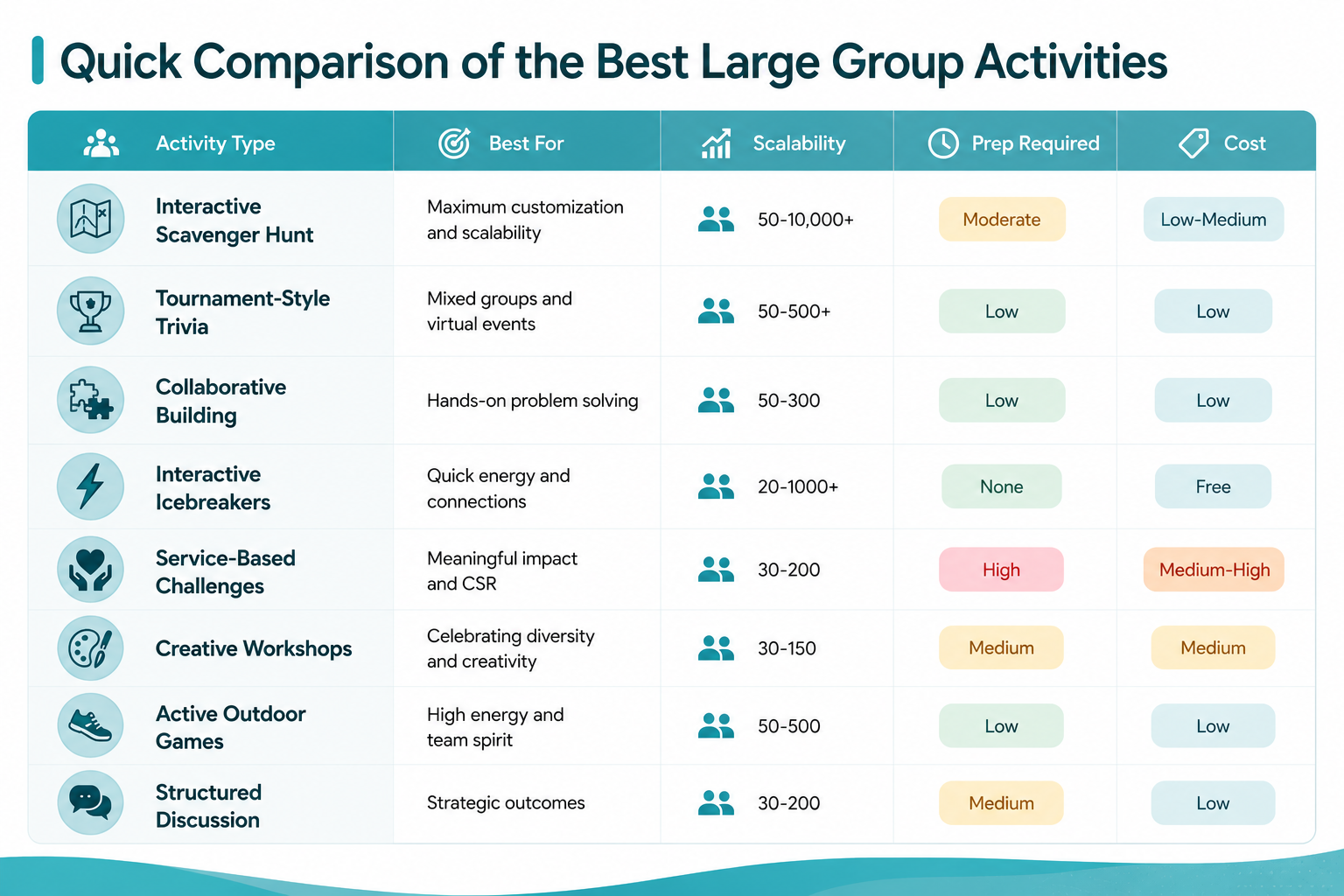
Team-building activities should prioritize collaboration over competition and consider diverse physical abilities and interests. The best choice depends on your specific context, not generic “best” rankings.
How to Choose the Right Activity for Your Large Group
Choose Based on Your Venue and Logistics
Your venue determines what’s possible before objectives even enter the conversation.
- Indoor vs outdoor – Scavenger hunts adapt to either, while Field Day Olympics need outdoor space
- Technology availability – Trivia platforms need WiFi and screens; icebreaker games need nothing
- Space per participant – Building challenges need table space; discussion formats work with theater seating
- Time constraints – A 30-minute slot favors icebreakers; 90 minutes opens up scavenger hunts
If you don’t have enough space for physical games, don’t force them. Choose activities matching your actual constraints.
Choose Based on Your Group Demographics
The people play differently based on who they are.
- Age range – Mixed generations often prefer trivia or creative workshops over physical challenges
- Physical abilities – Service projects and discussions include everyone; relay races exclude some
- Familiarity – Strangers need icebreakers; established teams can handle complex challenges
- Professional context – Executive retreats may find some simple game formats beneath them; casual social events may find structured discussions too formal
Consider cultural considerations and language barriers as well. Activities requiring complex verbal instructions struggle with multilingual groups; visual and physical activities translate across languages.
Choose Based on Your Objectives
What do you actually want to accomplish?
- Team building – Collaborative challenges, scavenger hunts, and service projects build real connections
- Entertainment – Outdoor games and trivia tournaments maximize fun factor
- Education – Customized scavenger hunts can incorporate learning objectives into gameplay
- Strategic outcomes – Discussion formats generate ideas; other activities don’t
An escape room creates excellent bonding but limited strategic output. A World Café generates ideas but limited bonding. Match format to goal.
Which Activity Is Best for You?
Use this decision framework to narrow your options:
Choose Interactive Scavenger Hunt if you need maximum flexibility and scalability. It works anywhere, adapts to any content, and handles groups from 50 to thousands. Platforms like ReadySet let you customize checkpoints for company values, onboarding content, or pure entertainment.
Choose Tournament-Style Trivia if you want universal appeal with easy execution. Nearly everyone understands trivia, it works virtually or in-person, and you can run it with basic technology. Your favorite song becomes a question category; your company history becomes team activity content.
Choose Collaborative Building Challenges if your priority is hands-on teamwork with visible results. The marshmallow challenge takes 30 minutes, requires cheap materials, and creates memorable moments. Teams problem solve together under time pressure.
Choose Service-Based Team Challenges if you want meaningful community impact. Building bikes for charity or assembling care packages creates purpose beyond entertainment. Friends leave knowing they made a difference.
Choose Interactive Icebreakers if you need to build energy fast with zero budget. Rock-Paper-Scissors tournaments and human bingo require no preparation and work in any space. They’re energizing activity options for conference openings.
Final Thoughts
Successful large group activities depend on clear objectives and proper matching between format and context. The activities that create inside jokes, build energy, and make people play together share common traits: they keep everyone involved, minimize waiting, and provide just enough structure without feeling forced.
After organizing hundreds of large group events, my recommendation is that interactive scavenger hunts offer the best combination of scalability, engagement, and customization. They’re the rare activity that works equally well for 50 participants or 5,000, adapts to any location on Earth, and can incorporate whatever content matters to your organization. The large team breaks into smaller teams, explores their surroundings, and competes in friendly competition without anyone feeling like they’re just watching.
Start with simpler formats and build complexity as your comfort level increases. A first-time event organizer can run human bingo successfully; customized scavenger hunts with integrated learning objectives require more planning.
If you’re ready to create a customized gamified experience for your next event, ReadySet offers a free trial that lets you build and test your own scavenger hunt with up to 10 participants. See how your large group games can transform from awkward activities into experiences your team actually talks about afterward.
The finish line isn’t just completing an activity—it’s creating connections that last beyond the event.