Best Team Building Activities for Summer Company Events
Summer company events are a rare opportunity to get people away from their desks, out of routine, and into shared experiences that strengthen company culture.
Best Team Building Activities for Summer Company Events
Summer company events are a rare opportunity to get people away from their desks, out of routine, and into shared experiences that strengthen company culture. The right team building activities can turn a summer party, kick off, offsite, or team event into something employees actually remember.
The challenge is choosing activities that feel fun without becoming shallow, and meaningful without feeling like another meeting. Below, we’ll compare the best team building activities for summer events, with a focus on options that work for small teams, a large group, remote teams, and the entire team at once.
Why Summer Team Building Activities Matter for Your Company Culture
Team building activities are designed to strengthen collaboration, enhance communication, and build trust among team members, creating a supportive environment for effective teamwork. When planned well, they help people build team connections that are difficult to form through normal Slack messages, team meetings, or a conference room presentation.
They also give employees a low-pressure way to meet other team members, welcome new team members, and create deeper connections across departments. This is especially valuable for hybrid organizations where a virtual team may not always get the same informal moments as people who work in person.
Effective team building balances light-hearted socialization with practical problem-solving, helping coworkers break the ice, practice active listening, and build trust. That balance matters because a team building session should not feel like forced fun, but it also should not be so casual that it misses the chance to strengthen team dynamics.
It is important to keep team-building exercises targeted to specific goals and to ensure participation from management. If leadership treats the activity as optional or unimportant, employees will too. But when managers take part as equal participants, each team member is more likely to engage, contribute, and feel that the exercise connects to real company culture.
Outdoor activities are especially powerful in summer because they change the environment. A shared challenge in a park, city center, campus, or event venue can create more energy than indoor team building games alone. Research on nature-based interventions has found that outdoor sessions can improve mood and reduce anxiety, especially when they last 20 to 90 minutes and include group participation (source).
Engaging in team building activities can lead to improved communication skills, enhanced problem-solving capabilities, and encourage creative thinking among team members. Activities that promote team cohesion can improve decision-making, problem-solving, and overall performance by fostering deeper relationships among team members.
There is also a business case. Gallup research has linked highly engaged teams with a 23% increase in profitability and an 81% reduction in absenteeism, showing how employee engagement can affect a company’s bottom line (source). Team bonding is not just a nice extra; it can support stronger teams and more resilient work.
How We Chose the Best Team Building Activities
Not every activity belongs at a summer company event. A fun game that works for ten people may fall apart with 300. A meaningful workshop may lose energy if it requires too much setup. The best team building activities need to work in the real world, not just on paper.
Here are the criteria we used.
Scalability: The activity should work for small groups, small teams, and a large group without losing structure. The entire group should be able to participate, even if people are divided into smaller teams.
Customization potential: Strong building activities allow companies to incorporate values, branding, messages, leadership themes, or internal knowledge. This helps a team building event reinforce company culture instead of becoming disconnected entertainment.
Location flexibility: Summer events often happen in parks, campuses, city centers, rooftops, conference venues, or hybrid formats. The activity should adapt to the venue, weather plan, and team size.
Engagement level: Good team building games involve different personality types. Extroverts should not dominate, and quieter participants should still have clear ways to contribute.
Educational value: The activity should promote teamwork, team communication, problem solving skills, creative thinking, leadership skills, or trust in a way that feels natural.
Setup requirements: Office Managers and Workplace Experience Managers need realistic logistics. The activity should have manageable technology, equipment, facilitation, safety, and preparation needs.
A team building exercise works best when the purpose is clear. For example, quick team building activities are ideal for kickstarting regular team meetings or stand-ups to build energy. Larger summer activities are better for encouraging teamwork, improving team trust, and helping teams work together across functions.
Top 7 Team Building Activities for Summer Company Events
1. Customized Scavenger Hunts
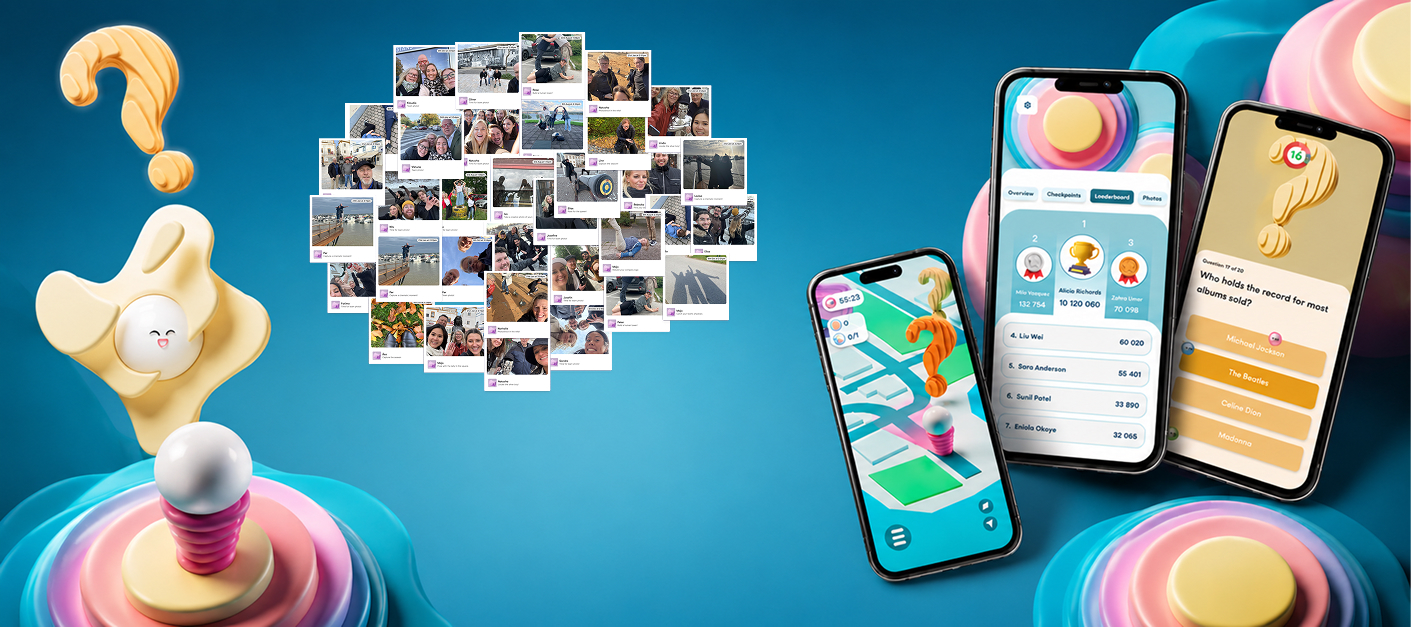
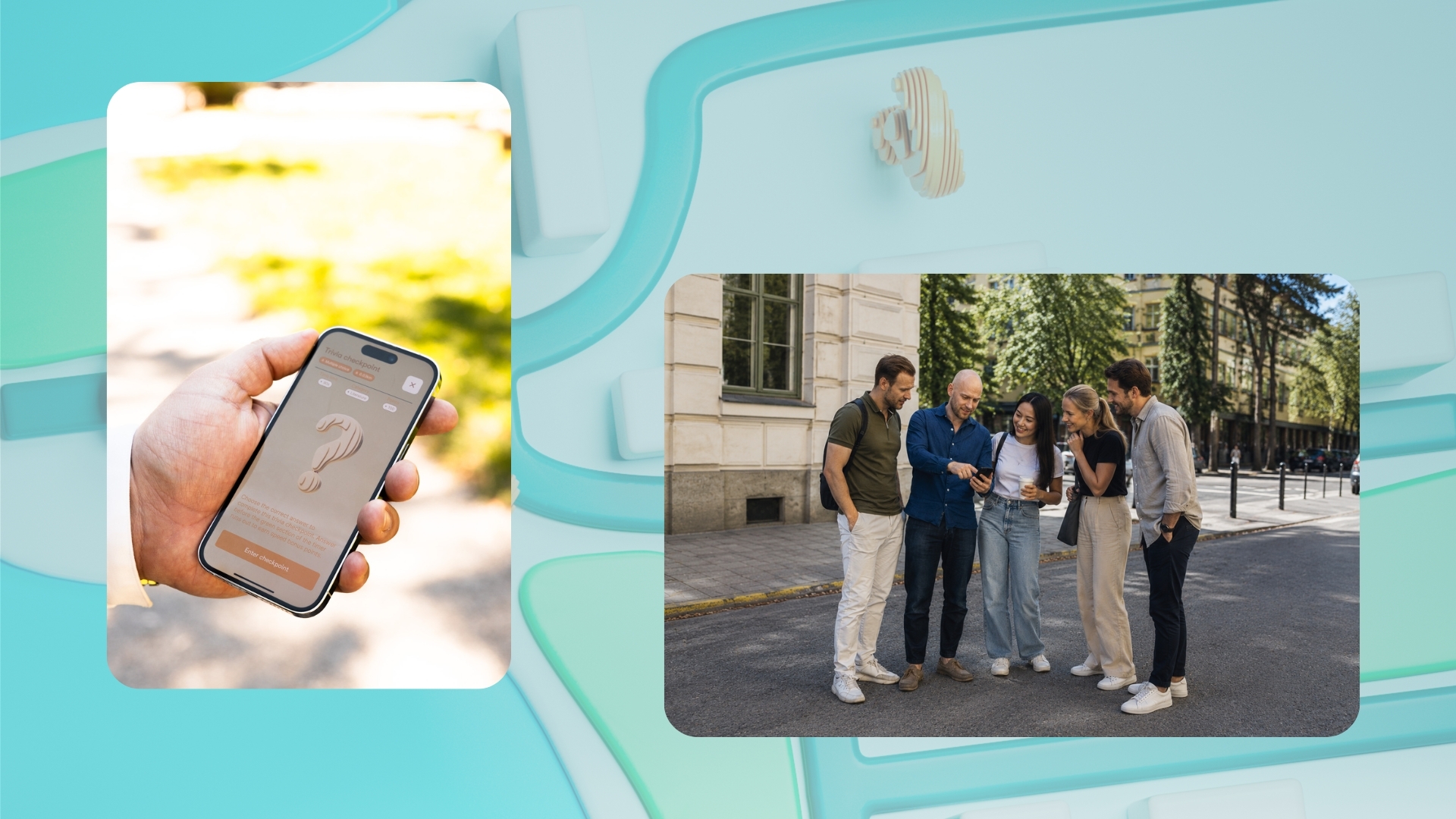
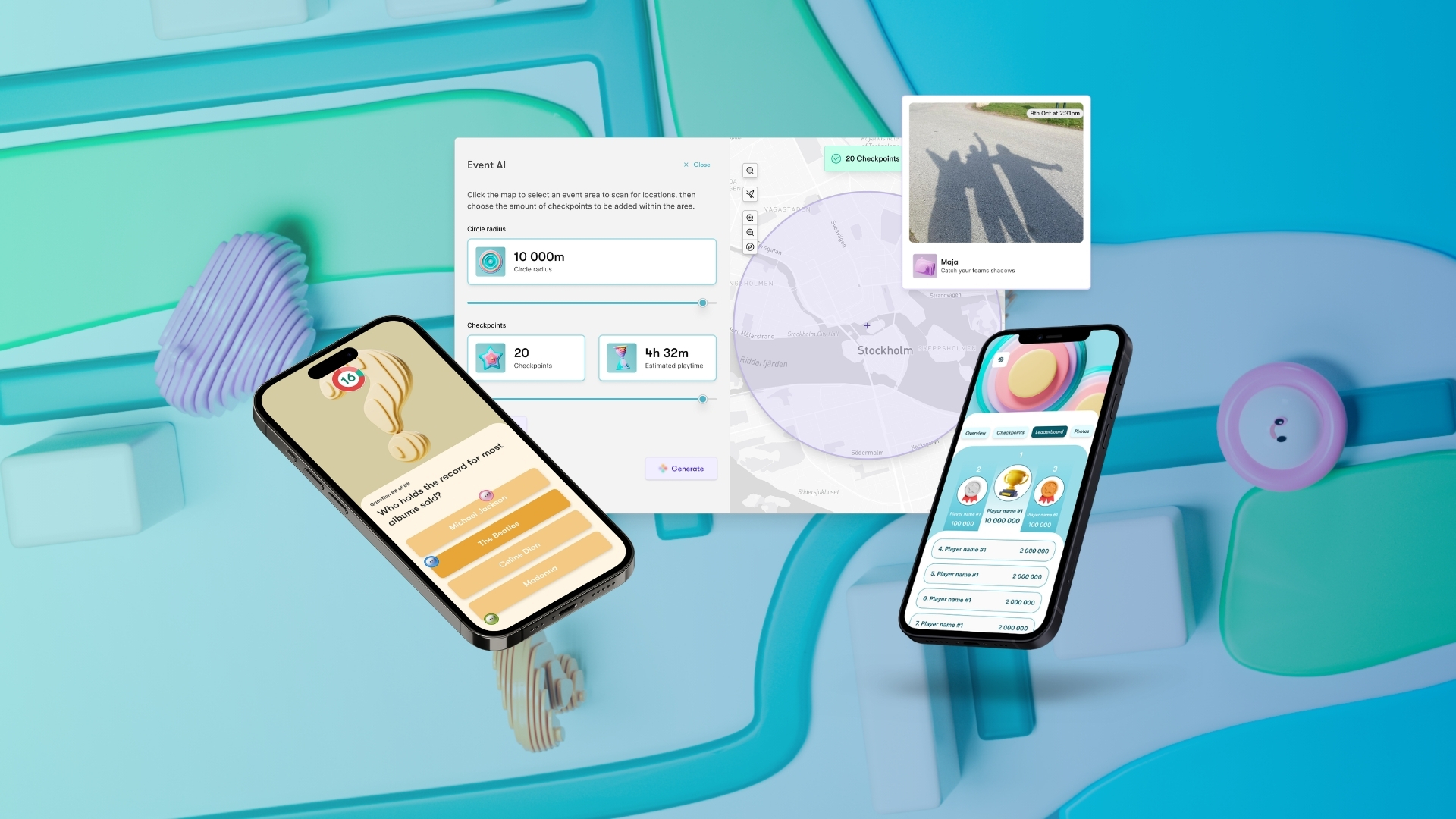
A customized scavenger hunt is one of the most flexible team building exercises for a summer company event. Modern scavenger hunts use mobile technology, GPS, QR codes, photo and video challenges, live leaderboards, and location-based missions to turn any venue into an interactive game.
With ReadySet, companies can create mobile multiplayer scavenger hunts, quests, and challenge games that can be played anywhere on Earth. The platform supports tens of thousands of players simultaneously, making it suitable for small teams, a regional offsite, or a global company kick off.
ReadySet also lets organizers tailor the experience with company branding, logos, typefaces, custom challenges, and values-based prompts. For example, ReadySet worked with TrailMix Games in London to turn company values into interactive challenges, helping employees connect abstract principles to real behaviors. You can read more about that example here: TrailMix Games and ReadySet: Values in Action.
.png)
Why It Stands Out
Customized scavenger hunts stand out because they combine movement, friendly competition, creative problem solving, and team collaboration in one format. Teams might solve clues, complete photo missions, answer office trivia, find locations, interview colleagues, or complete challenges tied to company values.
They are also highly adaptable. A scavenger hunt can be outdoors, indoors, hybrid, or part of virtual team building activities. It can take a few minutes as an energizer, run for an hour during a summer party, or unfold over several days as part of a larger team building event.
Unlike fixed venues, ReadySet can be played anywhere on Earth. This makes it useful for companies with distributed offices, event agencies building branded experiences, or organizations that want one consistent game across multiple locations.
Best For
Customized scavenger hunts are best for companies of any size planning summer parties, offsites, onboarding events, conferences, and culture days.
They are especially effective for organizations that want to reinforce company values through interactive challenges. If you want to boost employee engagement while helping people create deeper connections, a branded scavenger hunt is hard to beat.
Key Strengths
- Supports tens of thousands of players simultaneously.
- Can be played anywhere on Earth with mobile technology.
- Fully customizable with company logos, branding, typeface, and specific challenges.
- Combines outdoor exploration with team collaboration.
- Works for small groups, large groups, hybrid teams, and remote teams.
- Encourages communication skills, leadership skills, and strategic thinking.
- Creates a fun team building experience without requiring athletic ability.
A scavenger hunt also gives organizers many ways to encourage teams to collaborate. One team member might navigate, another might solve clues, another might manage submissions, and another might lead creative tasks. That distribution helps team effectiveness because different strengths become visible.
Possible Limitations
The main limitation is that participants need smartphones. Organizers should plan for battery life, mobile data, accessibility, and clear instructions.
Outdoor hunts are also affected by weather. A good backup plan may include indoor routes, indoor team building games, or a hybrid version that can continue inside if needed.
2. Escape Room Challenges
An escape room is a themed challenge where teams solve puzzles, uncover clues, and complete a mission before a time limit runs out. Escape room challenges are popular because they create pressure, urgency, and a clear shared goal.
They are also effective because they require team communication. Participants must share information quickly, listen carefully, divide tasks, and avoid working in silos.
Why It Stands Out
The escape room format stands out because it turns problem solving into a high-energy story. The timer gives people focus, and the puzzles force collaboration.
Virtual Escape Rooms require teams to work together to solve riddles and crack a digital lock before a timer runs out. This makes them a useful option for virtual team building activities when employees cannot gather in person.
Best For
Escape room challenges are best for small to medium teams, typically 6 to 10 people per room.
They also work well as an indoor backup activity for summer events when weather makes outdoor plans difficult.
Key Strengths
- Builds communication and leadership skills.
- Creates memorable shared experiences.
- Encourages problem solving under pressure.
- Available in many themed formats.
- Useful for activities for small groups and department-level team games.
An escape room can also help people practice communication skills because incomplete information is often spread across the group. If participants do not communicate clearly, progress slows down.
Possible Limitations
Escape rooms have limited group size capacity. A company with 200 employees may need multiple rooms, rotations, or parallel experiences.
They also require fixed locations, which can create transportation and scheduling issues. Cost per participant can be higher than mobile-first options.
3. Outdoor Sports Tournaments
Outdoor sports tournaments are classic summer team building games. Companies can organize volleyball, soccer, softball, relay races, field day stations, or lower-intensity lawn games.
These events are simple to understand and create immediate energy. They also make team spirit visible through jerseys, team names, cheering sections, and friendly competition.
Why It Stands Out
Outdoor sports stand out because physical activity promotes health, energy, and informal bonding. For companies with an active culture, sports can be a fun way to get people moving and laughing together.
The format also creates clear team roles. Some people lead strategy, some encourage teammates, and some focus on execution.
Best For
Outdoor sports tournaments are best for athletic teams and physically active company cultures.
They work well at parks, retreat centers, school fields, beaches, and outdoor event venues.
Key Strengths
- Encourages healthy competition.
- Feels natural during summer.
- Creates visible collaboration and shared goals.
- Builds team spirit quickly.
- Works well when paired with food, music, and awards.
The Crocodile River activity challenges teams to physically support one another to cross a designated area, fostering collaboration and strategic problem-solving. This kind of physical challenge can be added to a field day format when safety and accessibility are planned carefully.
Possible Limitations
Sports can unintentionally exclude people who are less physically able, less competitive, or uncomfortable with athletic activities. Organizers should offer lower-intensity roles, alternative stations, or non-athletic team games.
Weather is another factor. Heat, rain, and lack of shade can turn a good plan into a poor experience, so hydration, breaks, and indoor options matter.
4. Creative Workshop Sessions
Creative workshops include activities like cooking competitions, collaborative murals, pottery, music sessions, Lego builds, storytelling, or design challenges. They are useful when you want a more relaxed team building session that still encourages collaboration.
These sessions are often less physically demanding than sports and less intense than an escape room, which can make them more inclusive.
Why It Stands Out
Creative workshops stand out because they tap into different skills and personalities. Employees who may not enjoy athletic competition can contribute through design, storytelling, humor, planning, or craft.
They can also encourage creative thinking in a visible way. The final product gives the team something tangible to discuss and remember.
Best For
Creative workshops are best for teams wanting to explore creative collaboration in a relaxed environment.
They also work well for companies that value design, storytelling, innovation, inclusion, or cross-functional work.
Key Strengths
- Inclusive for various skill levels.
- Produces tangible results.
- Creates a relaxed, low-stress environment.
- Encourages brainstorming and shared ownership.
- Can support fun team building without heavy competition.
In the Lego Challenge, teams must work together to build a structure using Lego bricks based on a given prompt, which promotes collaboration and creative problem-solving. The Balloon Tower activity requires teams to build the tallest self-supporting tower using balloons, tape, or string, promoting brainstorming and delegation.
Possible Limitations
Creative workshops can be harder to scale for very large groups because they require materials, facilitators, tables, cleanup, and space.
They may also not appeal to all personality types. Some employees feel self-conscious about art or performance, so prompts should be playful rather than perfection-focused.
5. Volunteer Community Service
Volunteer community service turns a team building activity into shared impact. Teams might clean a park, support a food bank, assemble care packages, mentor students, or help a local charity.
This format works because it gives the team a purpose beyond itself. Employees are not just competing or socializing; they are contributing to something meaningful.
Why It Stands Out
Volunteer service stands out because it connects team bonding with values. If your company talks about community, sustainability, or social responsibility, this activity makes those values concrete.
It can also improve team connection because people often relate differently when working side by side on something useful.
Best For
Volunteer community service is best for companies with strong social responsibility values.
It can work for small teams or a large group, especially when the activity is divided into stations or shifts.
Key Strengths
- Builds a sense of shared purpose.
- Enhances company reputation.
- Can accommodate flexible group sizes.
- Helps employees form deeper connections through service.
- Reinforces values in a practical way.
Volunteer work can be especially meaningful when management participates alongside employees. That shared effort can reduce hierarchy and build team trust.
Possible Limitations
Volunteer events require coordination with external organizations. Availability, safety rules, transport, supplies, and scheduling can add complexity.
They may also have limited direct skill-building unless the activity is designed with reflection. A short debrief helps employees connect the service experience back to teamwork, communication, and values.
6. Problem-Solving Challenges
Problem-solving challenges include structured puzzles, construction tasks, strategy games, simulations, and physical communication activities. They are useful because they make workplace behaviors visible in a low-risk setting.
These activities can help employees improve problem solving skills while practicing planning, delegation, listening, and creative problem solving.
Why It Stands Out
Problem-solving challenges stand out because they connect directly to workplace capabilities. They can reveal how teams handle ambiguity, pressure, incomplete information, and disagreement.
Activities like Back-to-Back Drawing and Minefield highlight the importance of clear instructions and active listening, and build trust and spatial communication. Back-to-Back Drawing is an icebreaker game that improves communication skills by having one person describe an image while their partner attempts to draw it based solely on the description.
Best For
Problem-solving challenges are best for analytical teams, technical organizations, leadership programs, and teams that want measurable development.
They also work well when mixed with lighter icebreaker games so the event does not feel too much like work.
Key Strengths
- Develops critical thinking skills.
- Can be customized to industry challenges.
- Creates measurable outcomes and progress.
- Improves communication and collaboration.
- Helps teams practice decision-making under pressure.
Activities like the Marshmallow Challenge, where teams build the tallest freestanding structure using spaghetti and marshmallows, promote creative problem-solving and teamwork. The Marshmallow Challenge involves teams building the tallest freestanding structure using spaghetti, tape, and a marshmallow, promoting creative problem-solving and teamwork.
The Egg Drop challenge requires teams to design a structure that can protect a raw egg from breaking when dropped, encouraging creativity and teamwork under pressure. In the Blind Square activity, teams are blindfolded and must work together to form a perfect square with a rope, enhancing communication and collaboration skills.
A jigsaw puzzle challenge can also work well for mixed departments. To increase difficulty, give each team some pieces from another team’s puzzle so they must negotiate with other team members rather than solve everything alone.
Possible Limitations
Some problem solving activities may feel too work-like for employees who want a summer party to feel social and relaxed.
They also require careful facilitation. If the rules are unclear, if the challenge is too difficult, or if the time limit is unrealistic, the activity can frustrate rather than energize the team.
7. Virtual Reality Experiences
Virtual reality experiences use headsets, screens, or mixed-reality environments to create immersive team challenges. Participants might explore a virtual world, solve puzzles, guide a teammate through a simulation, or complete a mission together.
VR can be impressive at a company event because it feels new and memorable.
Why It Stands Out
VR stands out because cutting-edge technology creates a unique shared experience. It can simulate environments that are impossible to create in a normal office, park, or conference venue.
It is also weather-independent, which makes it useful when outdoor plans are uncertain.
Best For
Virtual reality experiences are best for tech-forward companies, younger teams, innovation events, and organizations that want something novel.
They can also support virtual team building activities when designed for distributed participation.
Key Strengths
- Highly engaging and memorable.
- Works regardless of weather.
- Appeals to gaming and tech enthusiasts.
- Can support collaborative missions and asymmetric roles.
- Creates shared stories after the event.
Virtual team building activities can improve communication, trust, and collaboration skills among remote teams, fostering a sense of community even when physically apart. Engaging in virtual team building activities can lead to increased employee engagement and satisfaction, as they create shared experiences that strengthen team bonds.
Effective remote team building relies on short sessions to prevent fatigue, low-friction tools, and a mix of quick icebreakers and larger events. Activities like online trivia games, show-and-tell icebreakers, or creative caption challenges are effective for remote teams, helping to build connections and promote teamwork.
Possible Limitations
VR can have high equipment and setup costs. It may also be difficult to run for an entire team at once unless there are many stations or rotations.
Some participants may experience motion sickness or discomfort. Organizers should offer alternative roles so no one feels forced into a headset.
Quick Comparison of the Best Team Building Activities
The right activity depends on your goals, budget, venue, and team size. Use this quick comparison to narrow down your options.

Icebreaker games are designed to ease tension and build inclusivity, creating an atmosphere where everyone feels comfortable engaging.
Two Truths and a Lie is a popular icebreaker game where each participant shares three statements about themselves-two truths and one lie-while others guess which is the lie. This simple truths and a lie format works because people learn surprising details quickly.
The Human Knot is an icebreaker activity where team members stand in a circle, grab hands with two different people, and work together to untangle themselves without letting go of each other’s hands. It is simple, physical, and often funny.
Icebreaker games can be used to introduce new team members and help existing members reconnect, making them effective for both small and large groups. They are also useful before larger team building exercises because they reduce tension and help people start talking.
For remote teams, office trivia, online board games, and short creative prompts can create energy before a bigger virtual team activity. For in-person groups, human knot, quick sketching, or a short scavenger clue can warm up the room.
How to Choose the Right Team Building Activity
Choose Based on Group Size
Start with team size. An activity that works perfectly for eight people may not work for 800.
For small groups, an escape room, creative workshop, jigsaw puzzle challenge, board games, or quick team building activities can work well. These formats allow each participant to speak, contribute, and be noticed.
For medium-sized groups, outdoor sports, volunteer service, problem-solving stations, and mobile scavenger hunts are often more practical. These activities can split people into teams while still keeping the entire group aligned.
For a large group, customized scavenger hunts are usually the strongest option because they can scale without requiring everyone to be in the same room or at the same station. ReadySet is built for this kind of scale, supporting tens of thousands of players simultaneously across locations.
If you manage multiple team teams across regions, mobile-first activities also make it easier to create one shared experience without forcing every office into the same physical venue.
Choose Based on Company Culture
The best team building activities should match your culture, not fight against it.
If your company values creativity, choose creative workshops, storytelling challenges, or a customized scavenger hunt with photo and video missions. If your culture values speed and analytical thinking, escape room challenges or problem solving challenges may be better. If your culture values wellness and outdoor connection, a walking scavenger hunt or volunteer cleanup can fit naturally.
Also consider physical activity levels. A sports tournament may energize one team and alienate another. A balanced event might include both active stations and low-pressure alternatives so employees can choose how to participate.
For new team members, icebreakers and guided challenges can help people integrate faster. For long-standing teams, activities that reveal new strengths and stories can refresh relationships.
Choose Based on Customization Needs
Customization is where a standard activity becomes a culture-building tool.
A generic scavenger hunt may be fun, but a branded scavenger hunt can connect employees to company values, product knowledge, leadership themes, or internal history. With ReadySet, companies can include custom challenges, company logos, brand colors, typefaces, and prompts that encourage collaboration around the company’s vision.
For example, a value like “customer obsession” could become a challenge where teams find examples of customer impact. A value like “move fast” could become a timed mission. A value like “think boldly” could become a creative pitch challenge.
This is where fun team building becomes more than entertainment. The activity helps employees understand what the company values and how those values show up in behavior.
Which Activity Is Best for Your Summer Event?
Choose Customized Scavenger Hunts if you need maximum flexibility, scalability, and brand integration. This is the best choice when you want a fun way to bring the entire team together while reinforcing values, encouraging teamwork, and creating deeper connections.
Choose Escape Room Challenges if you have small teams and want high-intensity problem solving. They are especially useful when you want employees to practice communication skills under pressure.
Choose Outdoor Sports Tournaments if your team enjoys physical competition and athletic challenges. Keep the format inclusive by adding non-athletic roles, hydration breaks, and alternative activities.
Choose Creative Workshops if you want a relaxed, inclusive environment for artistic collaboration. These are useful when your goal is team bonding, reflection, and creative output rather than competition.
Choose Volunteer Community Service if you want the team event to connect with purpose. This is a strong fit for companies that want to promote teamwork while contributing to the community.
Choose Problem-Solving Challenges if you want to improve problem solving skills, team communication, and decision-making. These work best when paired with a short debrief.
Choose Virtual Reality Experiences if your team is tech-forward and wants a memorable activity that does not depend on the weather. Make sure there are options for employees who do not want to use a headset.
Final Thoughts
The best team building activity depends on your company size, culture, goals, and event format. A good summer team building event should be fun enough to create energy and structured enough to strengthen collaboration, enhance communication, and build trust among team members, creating a supportive environment that encourages effective teamwork.
For most companies, customized scavenger hunts offer the strongest mix of flexibility, scalability, engagement, and customization. They work for small groups, large groups, remote teams, and the entire team. They can be played in person, outdoors, indoors, or across multiple locations. Most importantly, they can turn your company values into shared action.
If you’re planning a summer party, company kick off, onboarding day, or culture event, ReadySet can help you create a branded mobile game that fits your goals. You can start creating your game for free with up to 25 participants, test the experience with your team, and scale when you’re ready.